This week, our classrooms are busy with learning as our toddler morahs bring their Creation unit to a close with a special Tot Shabbat, and our primary classes continue exploring Parsha and fall. Behind the scenes, our morahs are also preparing to introduce Chanukah next week. Planning for a new unit while teaching each day takes time and creativity, so our staff meeting offered an opportunity to prepare together while exploring loose parts and open-ended art.
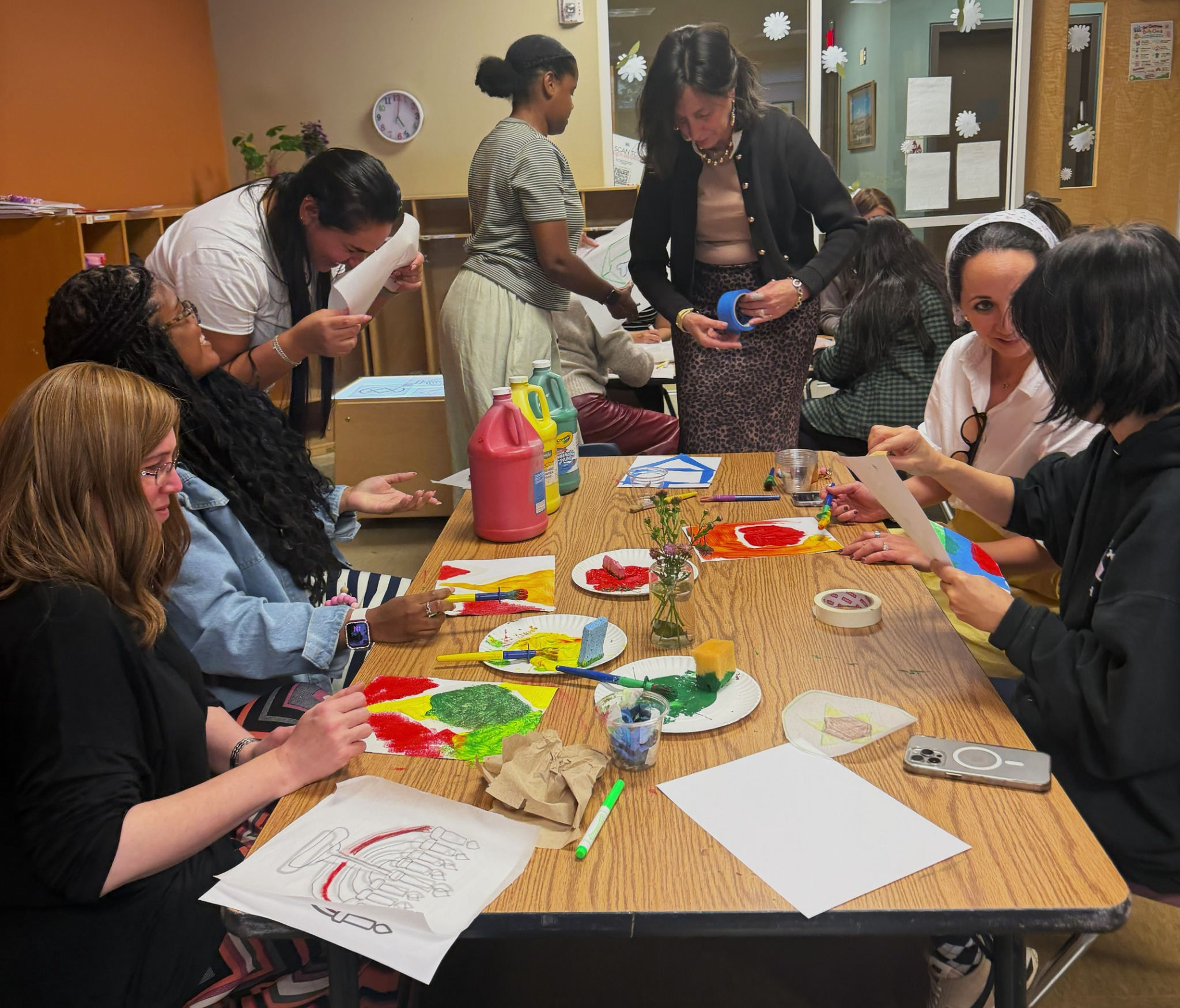
You may have already noticed (hopefully!) our growing emphasis on these experiences in your child’s classroom or in the work coming home. In early childhood education, loose parts refers to art materials children can move, combine, and rearrange in different ways, such as blocks, fabric pieces, and natural materials. Open-ended art gives children opportunities to choose materials and develop their own ideas, emphasizing the process of exploring and creating. As children try different arrangements and techniques, they practice solving problems, making decisions, and expressing their thinking.
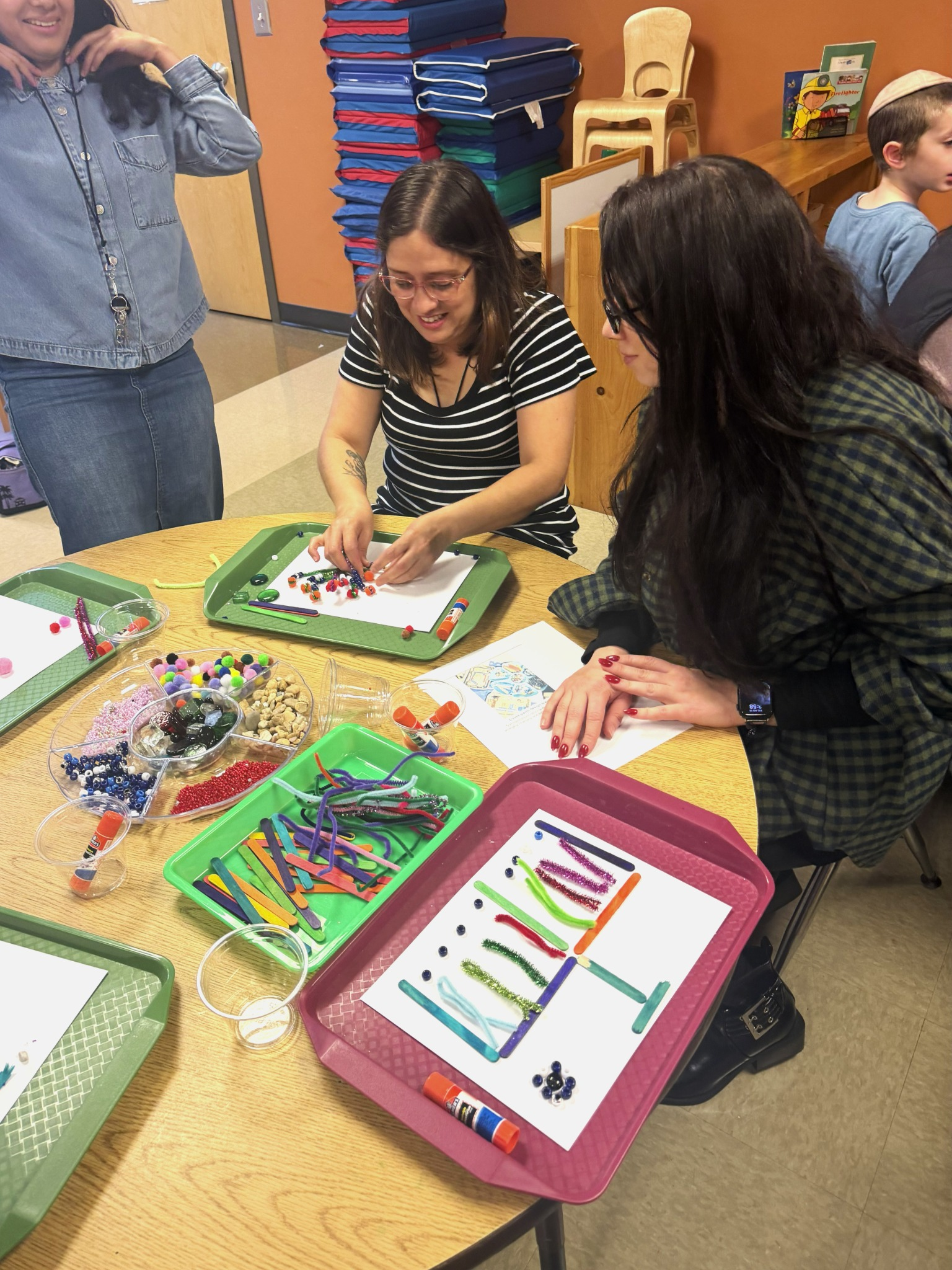
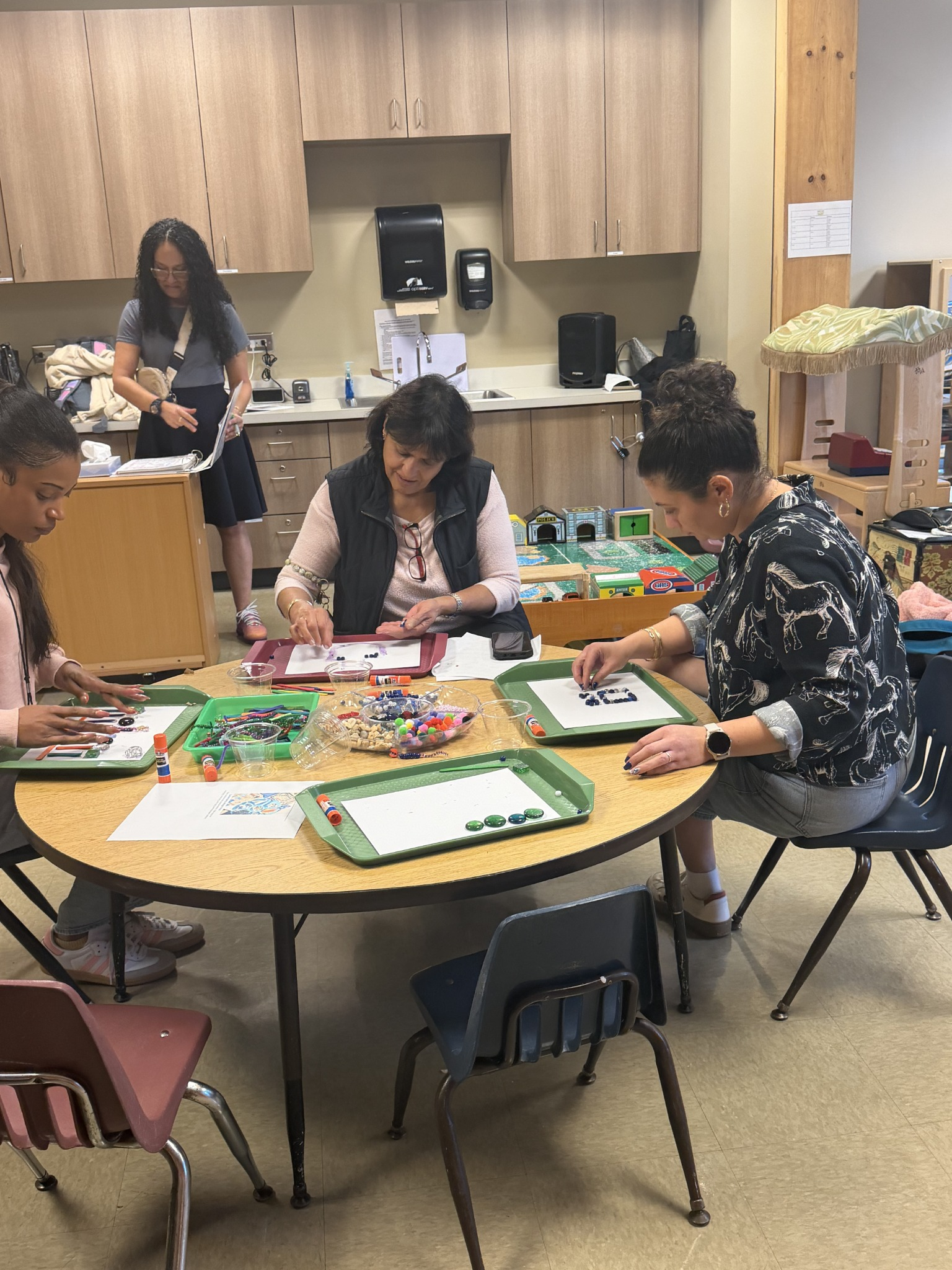
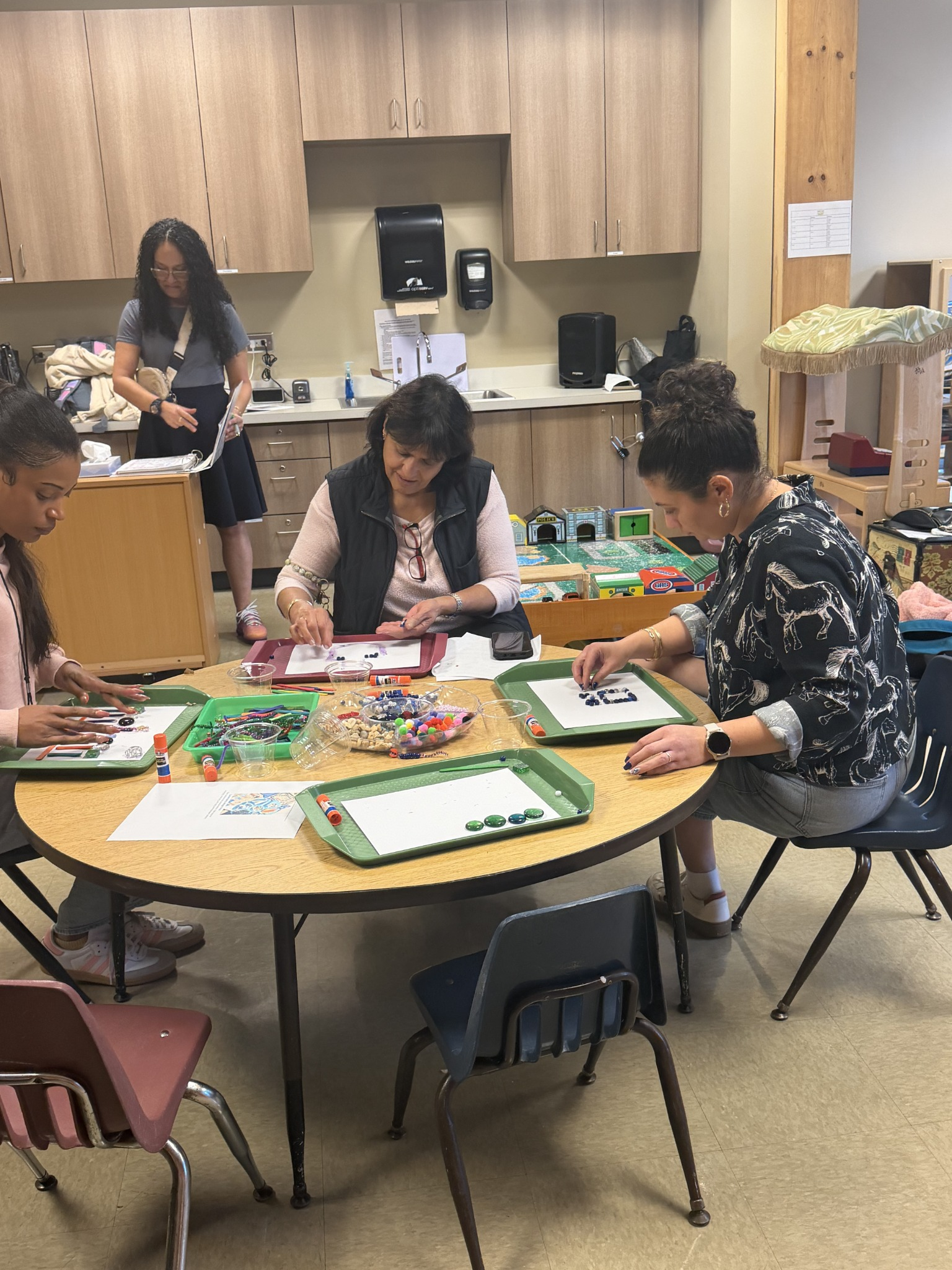
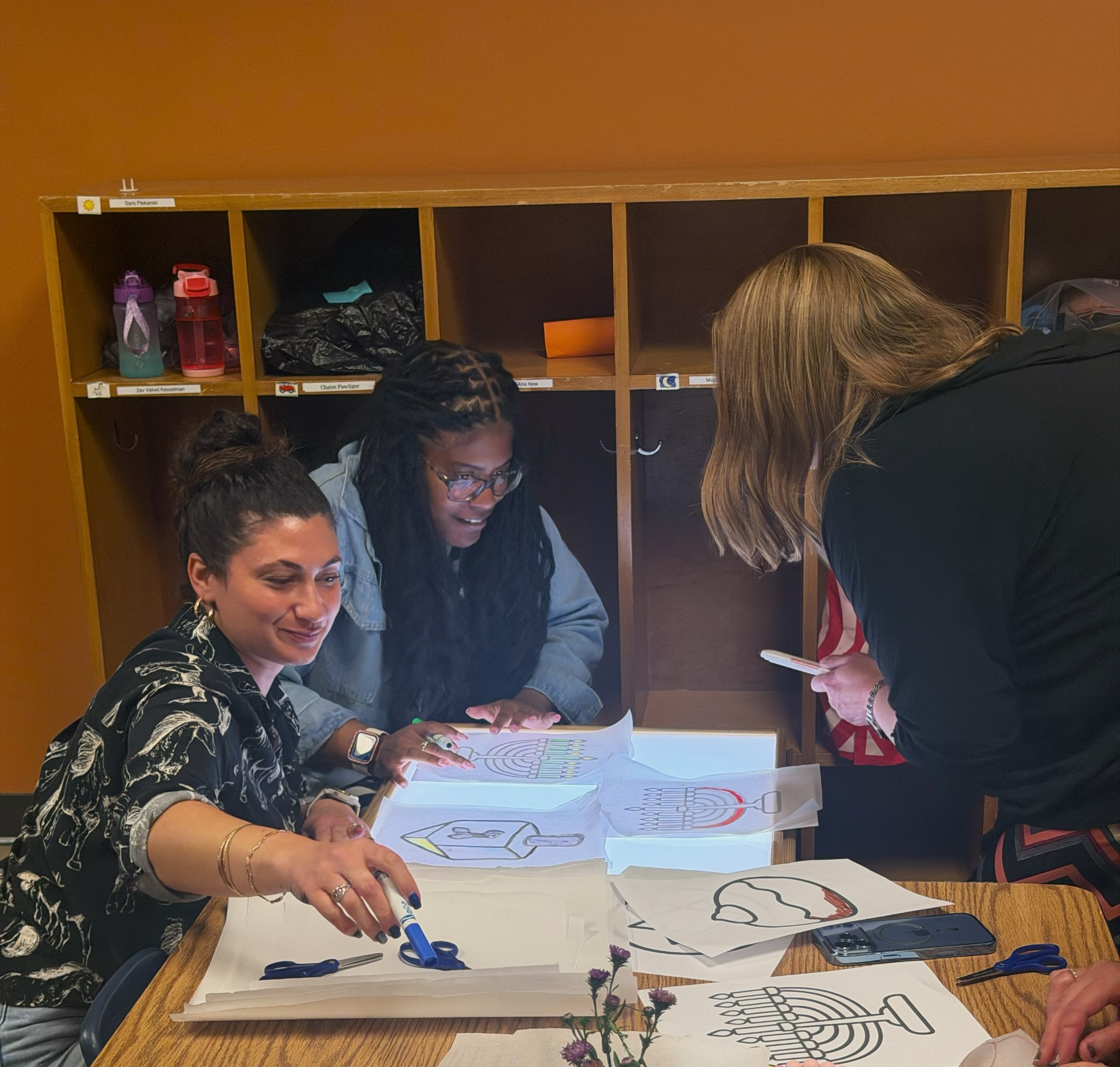
To bring this approach into our Chanukah planning, we gave our morahs a chance to experience it themselves. We set up three hands-on experiences: a light table, tape art, and loose parts Chanukah pictures. Each table offered thoughtfully chosen materials and opportunities to experiment with how they could be used.
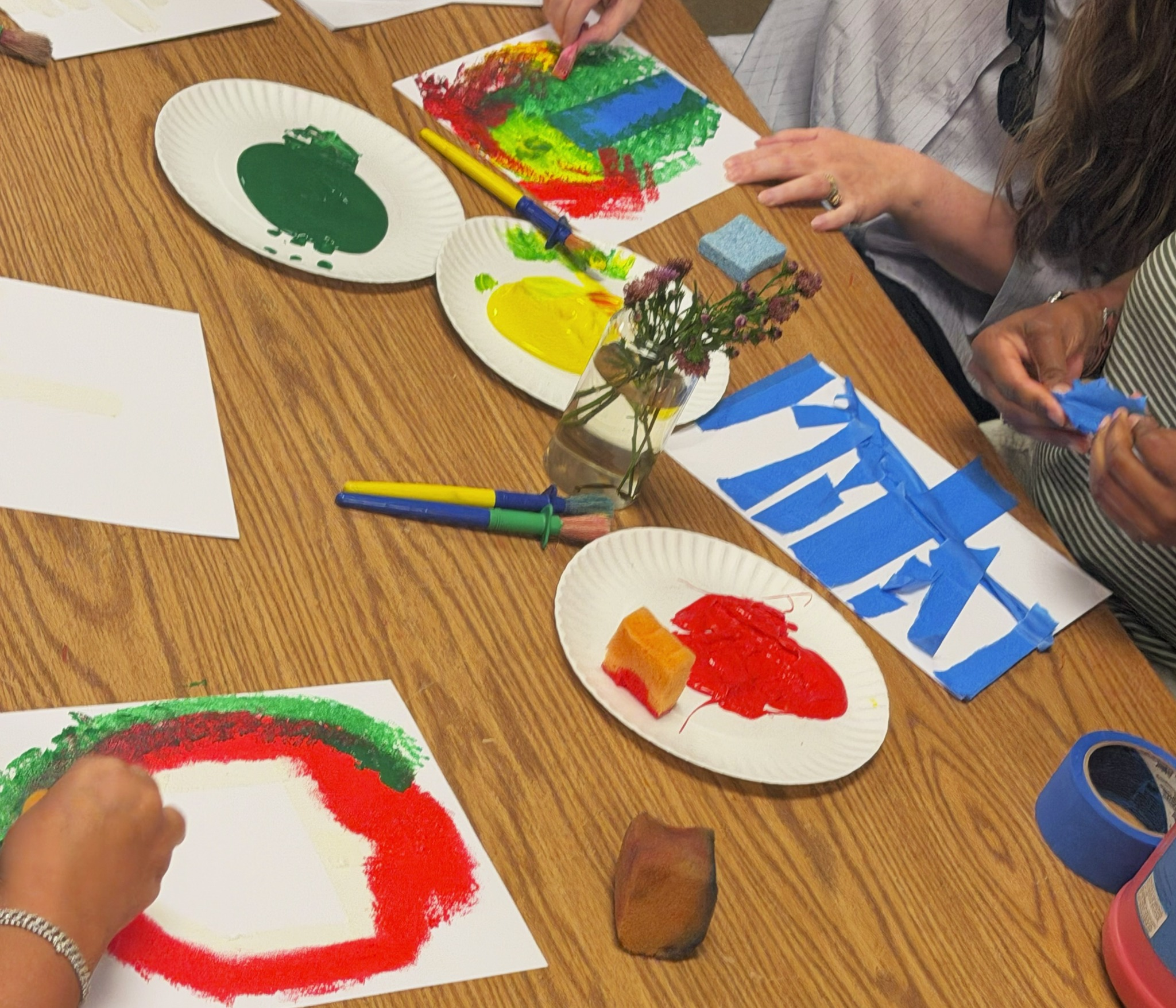
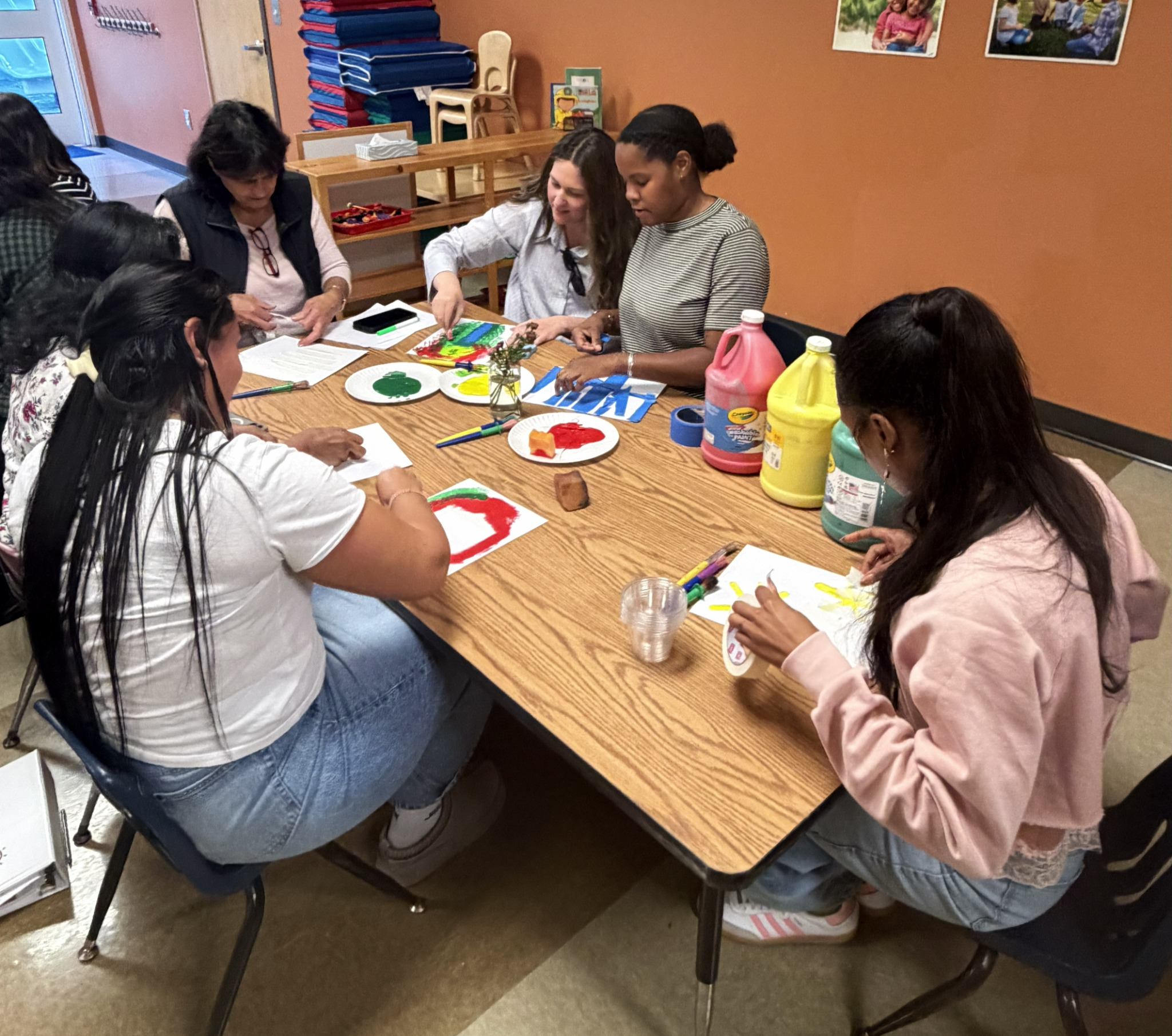
At the tape table, four morahs worked together, trying different ways to place and layer tape to create Chanukah pictures. Although they shared the same supplies, each picture developed differently, reflecting each morah’s choice of images, colors, and arrangements. At the other tables, the morahs explored how light could become part of a design and how loose materials could be arranged and rearranged into Chanukah pictures. Throughout the workshop, they exchanged ideas and learned from one another while developing their own creations.
The variety in their work illustrated what this approach can look like in a classroom. Children can share an experience and use the same materials while expressing their learning in individual ways. The morah supports this process by preparing the materials, demonstrating skills, and offering guidance as children work. This connects with Montessori principles of hands-on learning, purposeful choice, and growing independence within a thoughtfully prepared environment.
Exploring the activities firsthand helped our morahs consider how to introduce them, which skills their students might need help with, and where to leave room for the children’s ideas. Their guidance can also take the form of thoughtful conversation. Prompts such as “Tell me about what you’re building,” “What might happen next?” and “How did you decide to do it that way?” invite children to explain their choices and think further about their work.
With these materials, experiences, and questions in mind, our morahs are preparing to bring this approach into their Chanukah teaching next week. We look forward to seeing the children explore, share their ideas, and create work that reflects their own understanding of what they are learning.